
Three sets
Each match has three sets of three minutes. The first team to win two sets wins the match.
Loading page...
Drone soccer for schools and teams
A fast, team-based air sport in which protected drone balls fly, defend and score through suspended goal rings. Build pilot skill with a practice system, then progress to team play, a complete arena and competition preparation.
What is drone soccer?
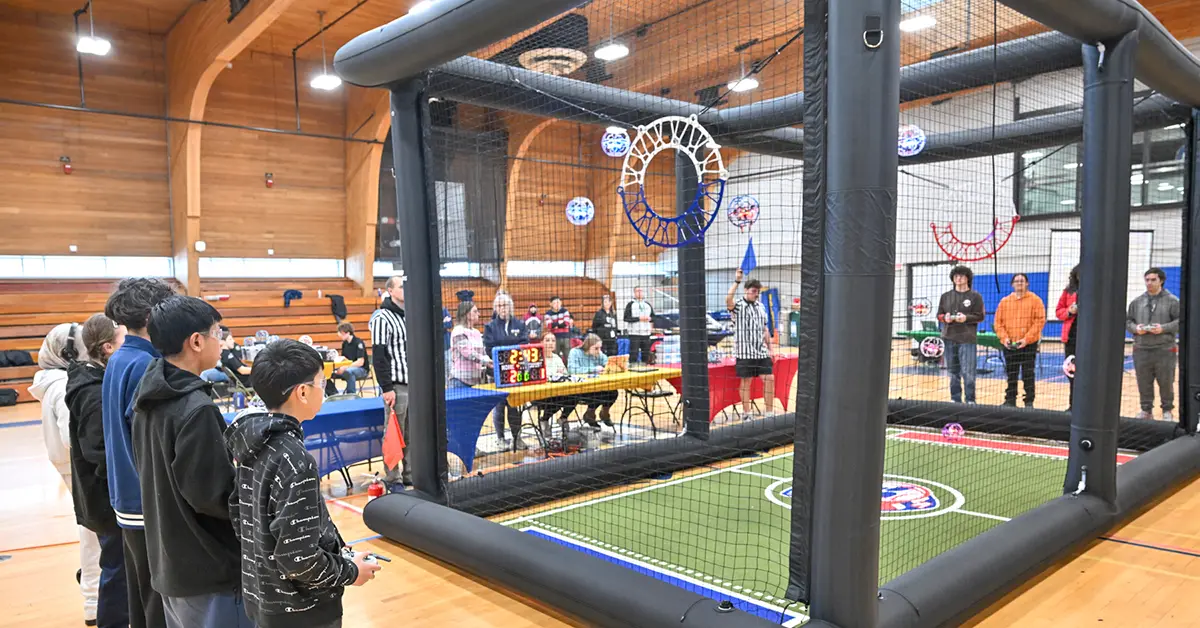
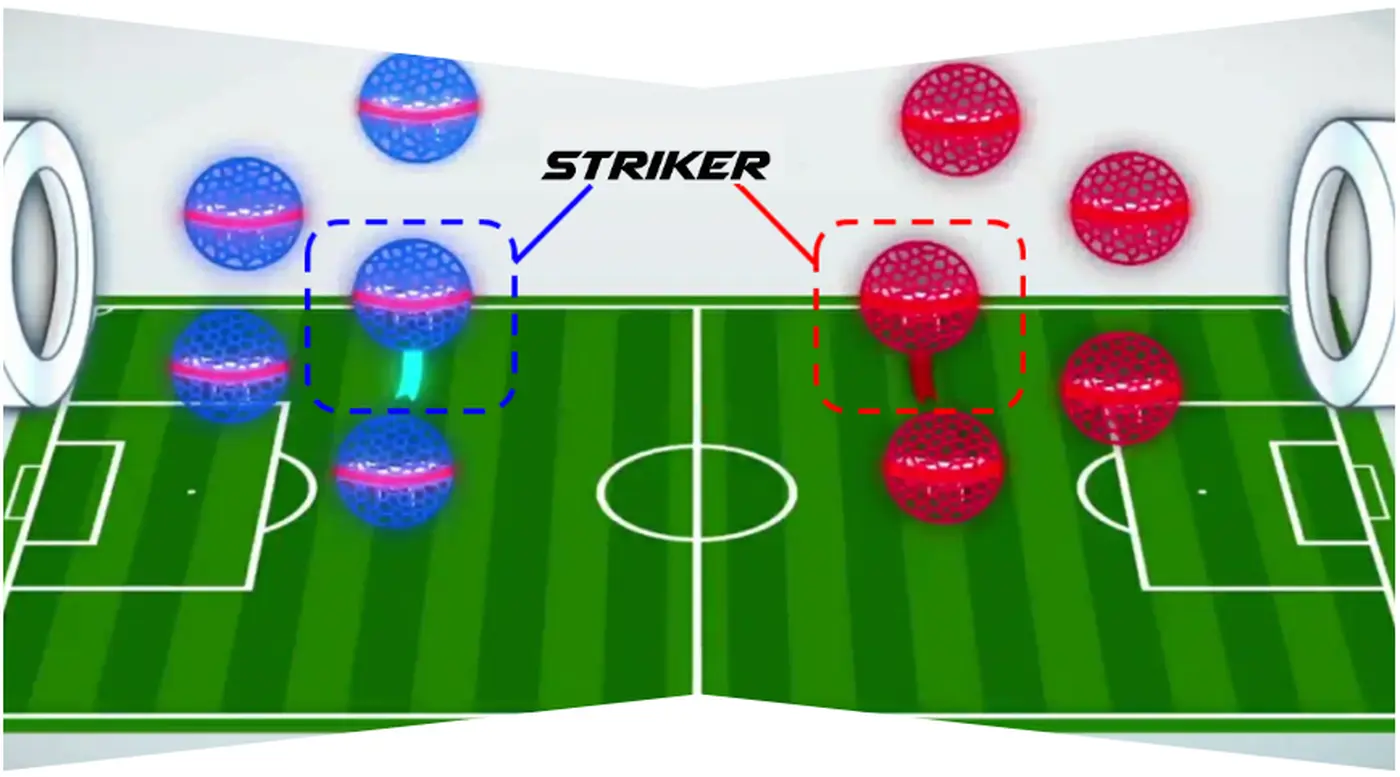
Drone soccer replaces the football with pilot-controlled multirotors enclosed in spherical protective frames. Each team has one scoring drone, the striker, while the remaining pilots guide attacks, protect their goal and block opponents.
The result connects flight control with communication, strategy, engineering and rapid maintenance. For schools, it can begin as a beginner piloting activity and grow into a structured team program.
How a match works
Precision matters, but the sport is designed around shared roles. A successful attack depends on the striker finding a route while teammates create space and protect against a counterattack.
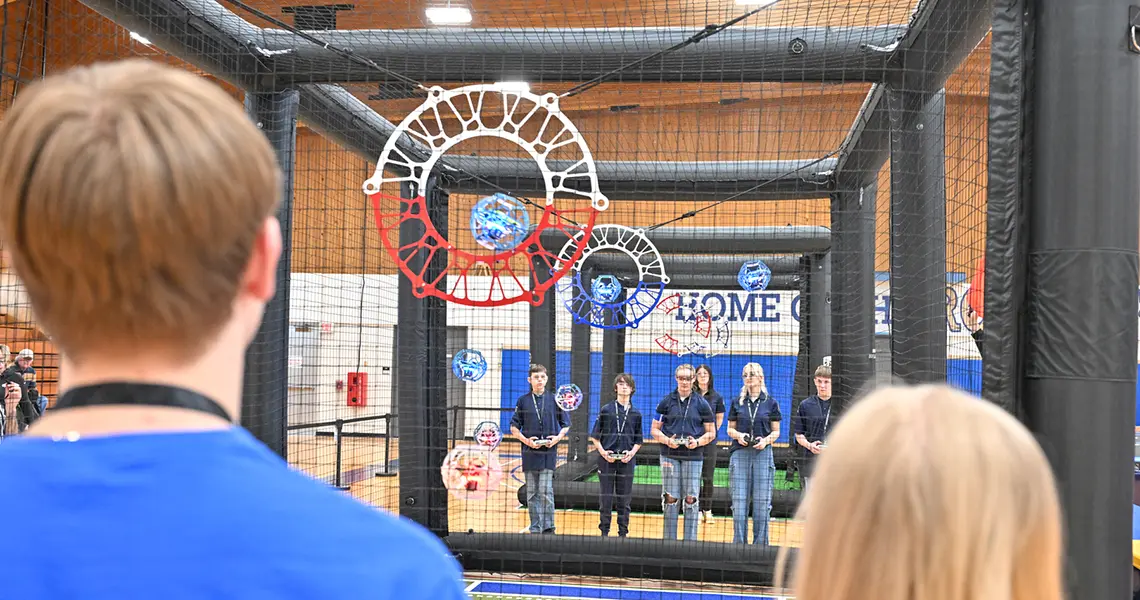
Each pilot controls one protected drone ball from outside the safety cage. The event organiser sets the active team size between three and five pilots.
Each team names one striker. Only that striker can score by flying completely through the opposing goal ring in the correct direction.
The other pilots guide the striker, protect their own ring and disrupt the opposing team through positioning, blocking and coordinated movement.
After scoring, every active drone on that team must return to its own half before the team attempts to score again.
Official framework
Drone Soccer is a provisional F9A class governed internationally through the FAI Aeromodelling Commission (CIAM). The summary below uses the 2026 Volume F9 rules effective 1 June 2026.
Each match has three sets of three minutes. The first team to win two sets wins the match.
Only the designated striker's drone ball can score; guide and defender drones cannot register a goal.
The complete striker drone ball must pass through the complete opponent goal ring in the scoring direction.
The flying zone is surrounded by a safety cage. Pilots control their aircraft from outside at the short ends.
| FAI subclass | Drone-ball diameter | Maximum weight | Recommended flying zone | Goal-ring opening |
|---|---|---|---|---|
| F9A-A | 40 cm class; must fit within 42 cm | 1.2 kg | 14 × 7 × 5 m | 60 cm internal diameter |
| F9A-B | 20 cm class; must fit within 22 cm | 300 g | 6 × 3 × 3 m | 40 cm internal diameter |
Rule note: Event organisers define the active team size and publish the applicable tie-break procedure. Always check the current event bulletin and technical inspection requirements before competition.
Read the current FAI Drone Soccer rules ↗Governing bodies and competitions
The Fédération Aéronautique Internationale (FAI) is the world governing body for air sports. Its Aeromodelling Commission, CIAM, maintains the international Drone Soccer rules, while national air sport organisations and event organisers manage entries and competitions.
See the sport
This official FAI highlight from the 2025 World Drone Soccer Championship in Shanghai shows the pace of a full competition environment.
Arena and equipment
A school can start small, but formal team play requires a protected flying zone, two correctly positioned rings, reliable charging and enough spares to keep sessions moving.
Contains the active flying zone and separates pilots and spectators from the drones during match play.
One ring for each team, sized and positioned for the selected drone-ball class and training format.
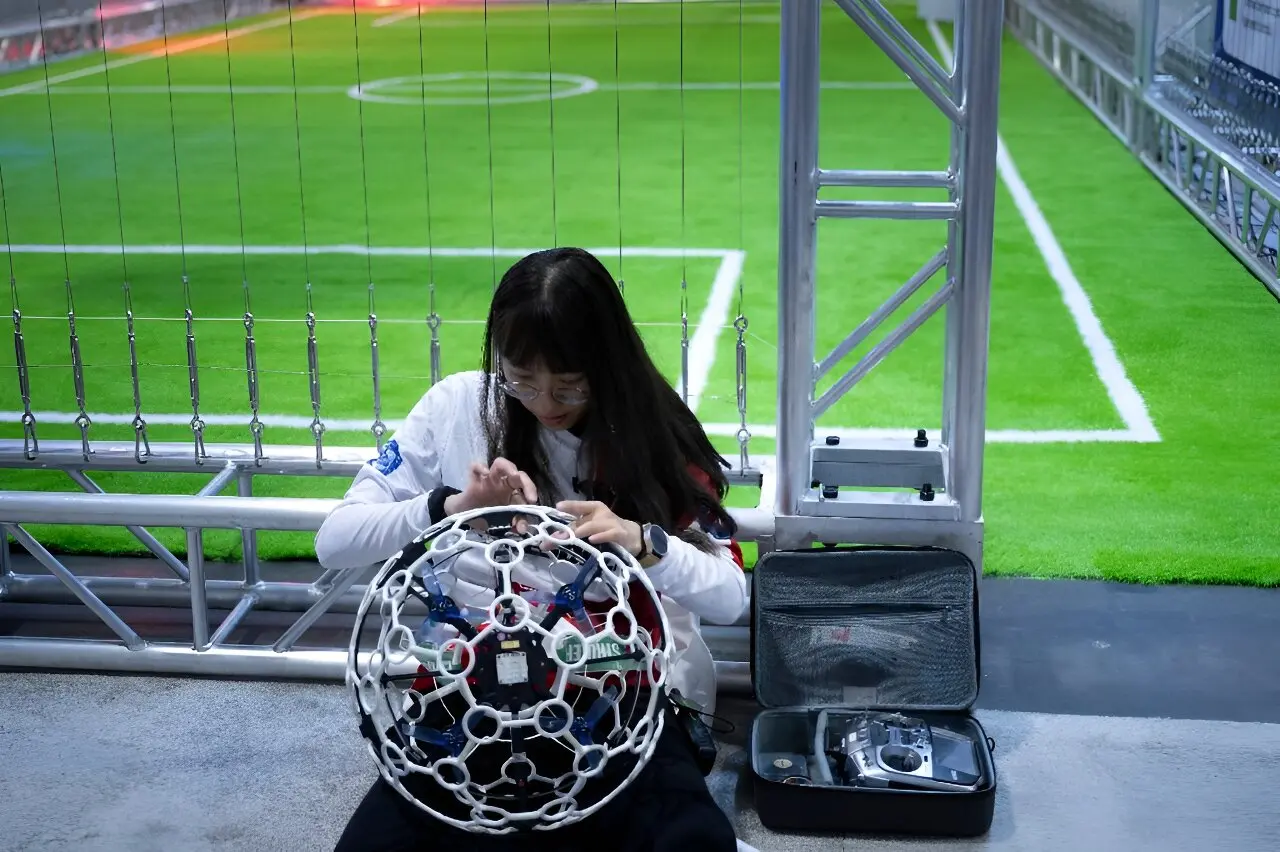
One aircraft and radio per active pilot, with clearly visible team colours and a distinguishable striker.
Session-ready battery rotation, suitable chargers and a supervised charging and storage procedure.
Replacement shells, propellers and wear parts plus tools for fast inspection and maintenance between sets.
Organised cases, setup guidance, pilot drills, instructor orientation and competition-preparation options.
Two ways to begin
The two models serve different stages of the learning pathway. Practice Drone details come from the supplied product information and media. The final configuration is confirmed in the institutional quotation.
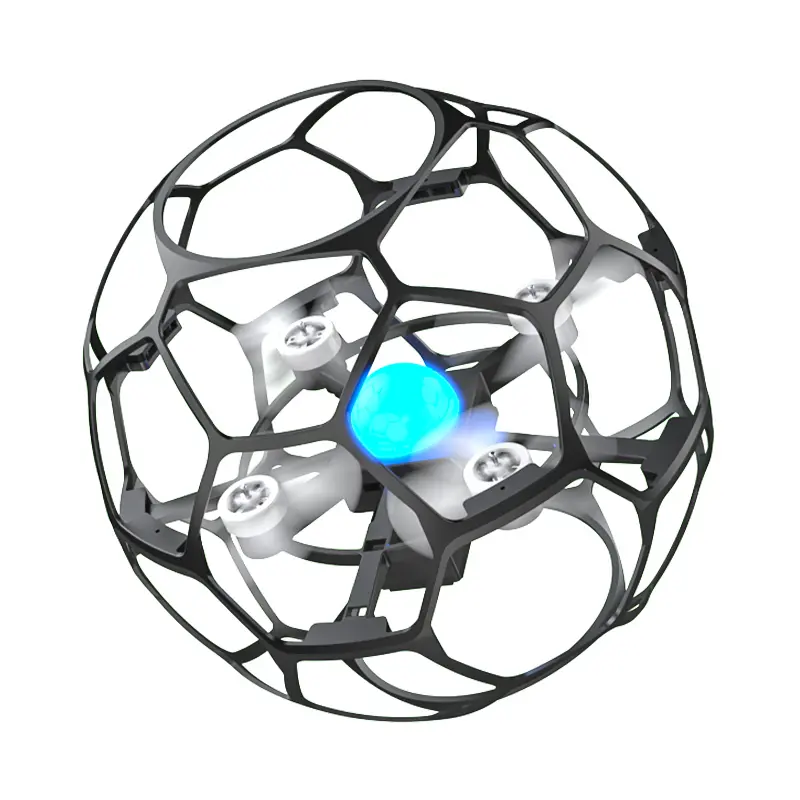 Practice model
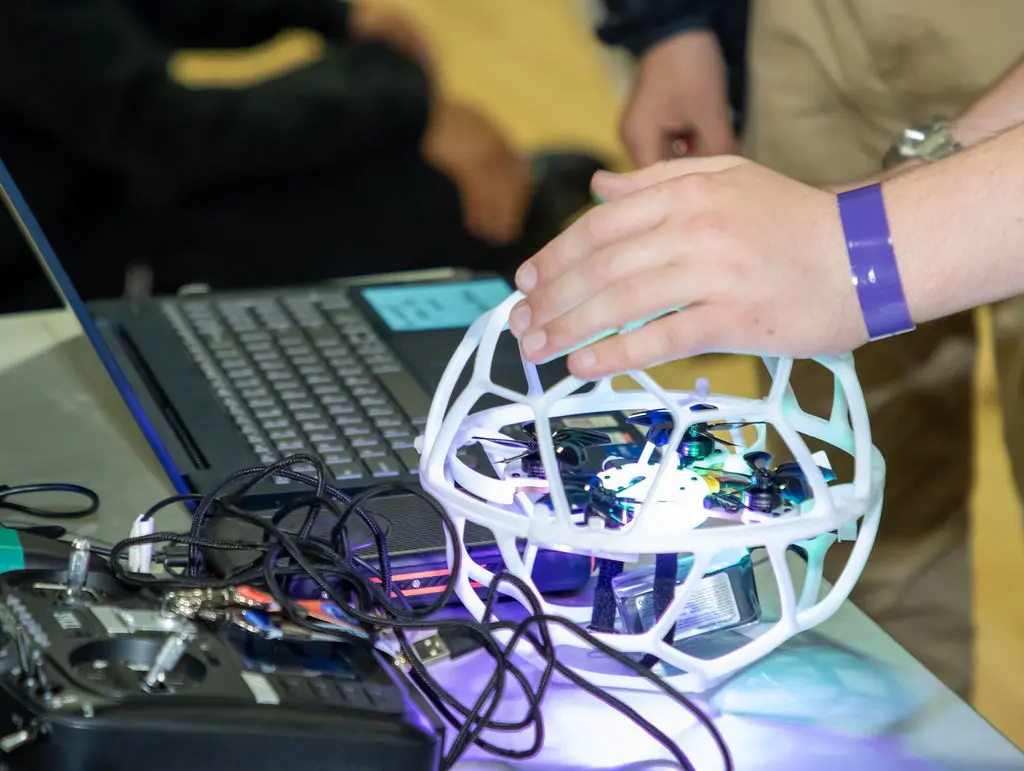
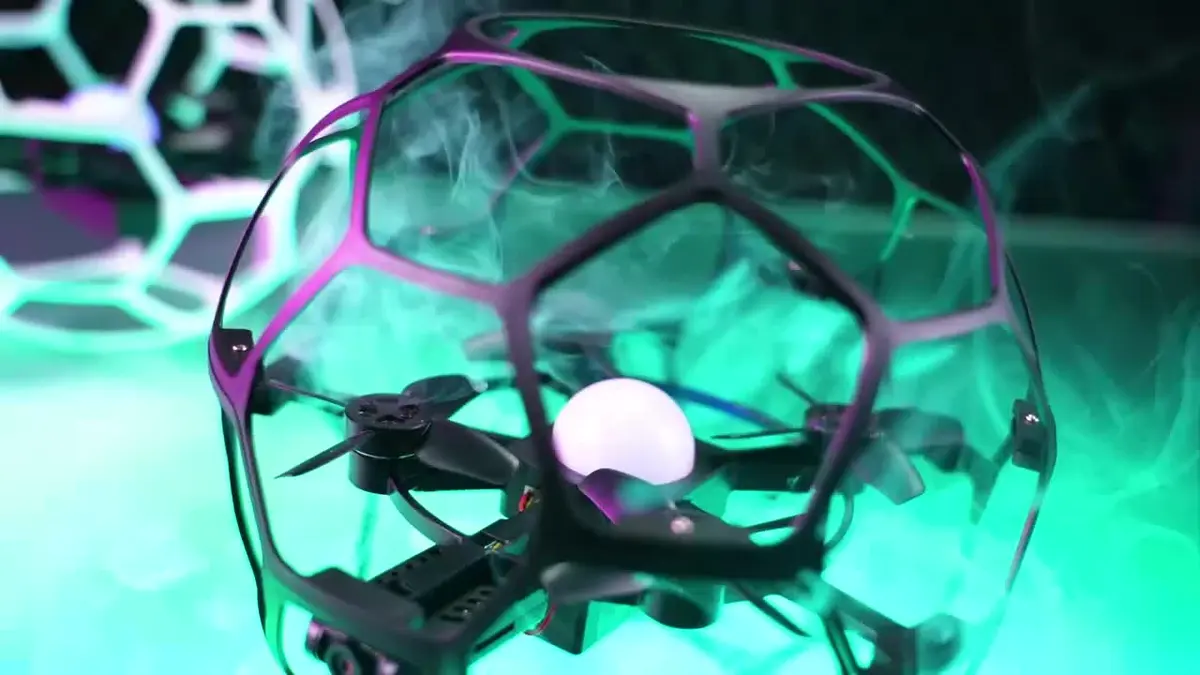
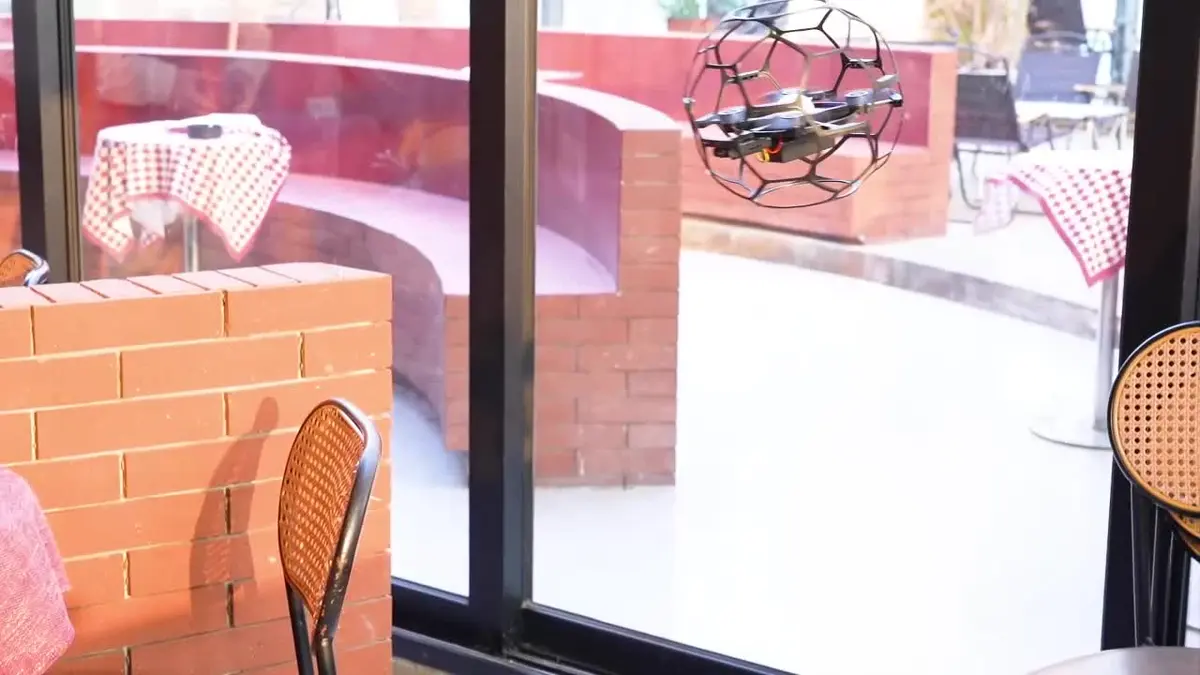
Beginner pathway
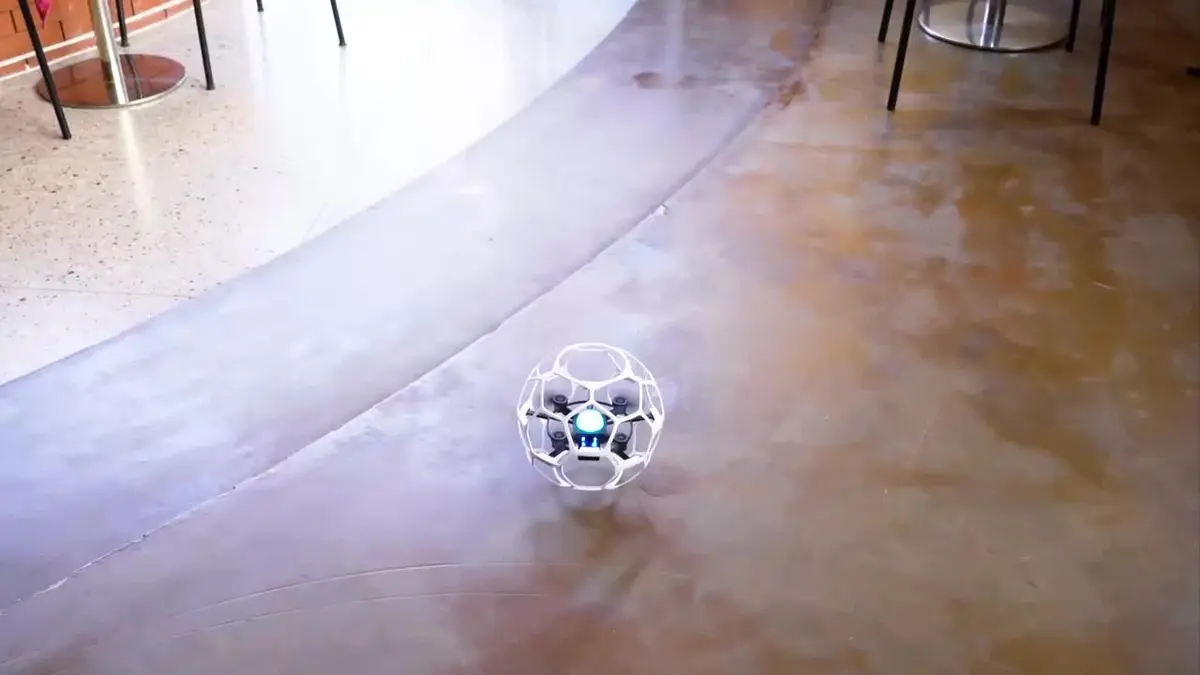
The D5 is a ready-to-go, 20 cm protected drone ball designed for first flights, school demonstrations and repeatable skills training. Its fixed-height mode, six-axis gyro and selectable speed modes help new pilots progress from hover control to ring approaches and team drills.
Source: supplied D5 product information and matching product media. Times and radio distance are approximate published values and vary with battery condition, environment and operation. The final package and specifications are confirmed in the quotation.
Request practice-drone pricing ↗Practice demonstration
The supplied demonstration shows the protected 200 mm model, controller operation, altitude-hold flight, speed changes and goal-ring practice.
Competition pathwayAdvanced team pathway
A competition configuration is intended for developed pilots, structured team practice and preparation for organised events. Samtech will match the drone-ball class and complete equipment configuration to the institution's target rules and competition pathway.
No model-specific Competition Drone figures from the earlier catalogue are used here. Diameter, weight, power system, flight modes, included components and event conformity will be documented for the exact model offered in the quotation.
Program packages
Exact quantities, arena dimensions, delivery and training are matched to the facility, learner level and whether the goal is classroom activity, club play or formal competition.
For first-flight skills and school demonstrations before investing in a full arena.
For repeat club sessions, role-based drills and protected team matches.
For established teams developing technical, tactical and event-readiness skills.
All packages are customised. Included quantities, compatibility, shipping method and final product specifications are confirmed in the quotation.
Drone soccer questions
For procurement, delivery and general classroom safety questions, visit the complete FAQ centre.
Browse all FAQs →It is a remotely controlled multirotor enclosed inside a spherical protective frame. The frame keeps the propellers and aircraft components inside the ball and allows controlled contact during play.
Under the current FAI F9A rules, an organiser selects between three and five active players per team. Each pilot flies one drone ball, and only the designated striker can score.
No. A school can begin with practice drones, a controlled flight area and portable training rings. A fully enclosed arena is required for formal match play and should be added as the program develops.
The Practice model prioritises approachable altitude-hold flight and resilient beginner training. The Competition model adds a carbon-fibre core, brushless performance and advanced flight modes for experienced pilots and team preparation.
The listed Competition model fits within the published F9A-B size and weight envelope, but Samtech does not claim FAI certification on this page. Final conformity depends on the complete event configuration, the current rule edition and organiser inspection.
Yes. Samtech can configure instructor orientation, student training, batteries, charging equipment, shells, propellers, tools, spare parts, storage and arena setup around the institution's intended program.
Institutional quotation
Tell us your learner age, team size, available space and whether you need practice equipment, a full arena or competition preparation. We will configure an institutional proposal.